
Eightfold AI has won the Q3 2026 Catalyst Award in the EM360Tech Quarterly Impact Index, recognising a campaign that brought together enterprise AI, workforce transformation and talent management in one focused conversation.
The Catalyst Award recognises campaigns that perform strongly across multiple channels, turning audience attention into continued engagement and commercial momentum. It looks at how the campaign works as a whole, rather than judging individual pieces of content in isolation.
Eightfold's winning campaign centred on the Tech Transformed podcast How AI Is Transforming the Talent Lifecycle, supported by an article exploring how businesses can identify skills gaps as agentic AI changes the work employees do. Together, they addressed a challenge that's becoming harder for enterprises to ignore.

Businesses are introducing AI systems capable of carrying out increasingly complex tasks, but they don't always know what that means for the people working alongside them.
The Campaign That Drove Impact
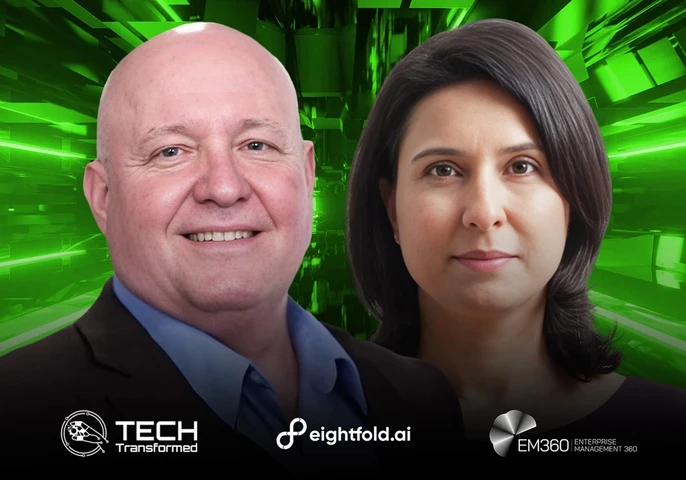
Eightfold AI's campaign was built around an episode of Tech Transformed, with Dana Gardner, Principal Analyst at Interarbor Solutions, speaking to Meghna Punhani, Chief People Officer at Eightfold AI. In their discussion on AI and talent management, they looked at what happens to recruitment, employee development and retention when AI starts changing the work people do.
Much of the conversation focused on the decisions businesses need to make about their existing workforce as these technologies become part of everyday operations. Punhani argued that organisations need to rethink how they divide responsibilities between employees and AI agents.
There's little point introducing technology into a process without considering whether the process itself still makes sense, or whether people could be doing something more valuable with their time. She drew on Eightfold's own experience to explain what this can look like in practice.
One example involved an employee moving from immigration services into social media management, a career change that might never have been considered if the business had looked only at their previous job title.
The accompanying article, How to Identify AI Skills Gaps Before Agentic AI Changes the Work, explored what businesses need to understand about their employees before making these kinds of workforce decisions. If businesses don't understand how employees' responsibilities are changing, they'll struggle to identify which skills their workforce needs next.
How the Campaign Held Together
There was a natural connection between the two pieces of content because the article picked up a problem the podcast had already established. During the conversation, Punhani discussed the limitations of managing talent around fixed roles and job descriptions.
An employee's current position doesn't necessarily reflect everything they can do, particularly when AI is changing which tasks people are expected to perform. The supporting article took that idea into workforce planning. It examined how organisations can assess the work AI might change, identify the human capabilities they'll still need and compare those requirements with the skills already available internally.
That gave the campaign two ways to approach the same enterprise challenge. The podcast provided the wider discussion, including Eightfold's experiences and the organisational decisions involved. The article gave readers a more detailed explanation of one problem they might already be facing.
Both remained connected to a central idea: preparing a workforce for AI requires a better understanding of people's capabilities and how those capabilities can be used as work changes.
AI Reshaping the Talent Model
CHROs are rebuilding jobs, skills and mobility as AI agents enter the workforce, shifting talent from static roles to dynamic, skills-based systems.
Signals of Cross-Channel Impact
The EM360Tech Quarterly Impact Index award criteria assess campaign performance across channels, including website and social engagement, alongside lead generation and conversion activity. Eightfold's selection as the Q3 Catalyst winner recognises the performance of its campaign against those criteria.
HR leaders could relate to the discussion about recruitment, employee development and internal mobility. Technology leaders introducing AI agents had a reason to consider how those systems would change existing workflows.
Business leaders responsible for workforce planning could see the consequences of making investment decisions without understanding the skills already available. These audiences approach AI adoption from different positions, but the podcast gave them a common problem to consider.
The supporting article then offered a more specific route into the workforce planning implications.
From Engagement to Momentum
The next challenge for an enterprise campaign is giving interested audiences a reason to continue exploring the subject. Eightfold's podcast addressed that challenge by connecting AI adoption to decisions organisations are already having to make about their employees.
Recruitment was one part of the discussion, but Punhani also addressed career development, internal mobility and the importance of trust when AI influences decisions about people. Trust was particularly important to the conversation. People need to know where AI fits into decisions about their careers, including how recommendations are made and what information is being used to assess their opportunities.
Punhani also emphasised the need for HR and technology leaders to work together rather than approaching AI adoption as separate departmental projects. These are issues that can lead to more substantial discussions about workforce strategy, governance and investment.
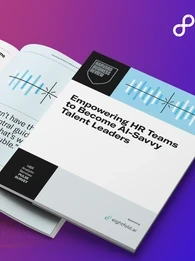
Building AI Talent Architecture
Positions HR as the architect of AI-ready workforces, aligning roles, reskilling and leadership models with enterprise automation goals.
They're also closely connected to the problems Eightfold's talent intelligence technology is designed to address. The supporting article gave readers another reason to explore those problems. It explained how organisations could assess existing workforce capabilities before deciding where training, recruitment or redeployment might be necessary.
That progression provided a credible foundation for deeper engagement and show how the content connected a broad technology conversation with practical decisions that enterprise buyers may need help making.
The Enterprise Takeaway
Eightfold's campaign offers a useful lesson for enterprise marketers working with complex technology subjects. A strong campaign needs a clear understanding of the problem its audience is trying to solve. In Eightfold's case, the starting point was the changing relationship between AI, work and employees.
The podcast had enough depth to explore that problem from several directions without losing its focus. The supporting article worked because it developed something the audience could take further. Someone interested in Punhani's discussion about changing responsibilities could explore how to assess the skills their own organisation would need.
That relationship between the assets is worth paying attention to. Supporting content doesn't have to repeat the original conversation to remain relevant. It can help readers investigate a particular concern, understand its consequences or work towards a decision. For enterprise campaigns, the aim should be to make each piece of content useful in its own right while keeping the wider message recognisable.
Mitigating AI Risk in Hiring
Key questions leaders must ask before trusting agentic AI with workforce decisions, from bias controls to transparency and oversight.
Final Thoughts: The Role of the Catalyst Award in the Impact Index
Eightfold AI joins Expel, Observe.AI and Dr Joe Perez among the Q3 2026 EM360Tech Quarterly Impact Index winners. The awards recognise different kinds of achievement. Vanguard celebrates original thinking and fresh perspectives in podcast content.
Apex looks at how well a podcast performs with its audience, while Authority recognises experts whose contributions have helped shape conversations within the EM360Tech community. With Catalyst, we're looking at the bigger picture of a campaign. The focus is on how the content performs together, reaches audiences through different channels and encourages people to keep engaging with the subject.
Eightfold's campaign brought a clear enterprise problem into a podcast-led discussion, then developed one of its practical implications through supporting content. Its Q3 win recognises the value of that coordinated approach, where the wider campaign gives audiences more than one opportunity to engage with a subject that affects the decisions they're making.




Comments ( 0 )