
For three years, the story of artificial intelligence in America has largely been told through gigawatts, GPUs and trillion-dollar valuations. On 3 November 2026, another part of that story came into focus at the ballot box. Across towns, cities and statehouses, voters weighed in on the data centres powering the AI boom. In many communities, voters made their concerns about these developments clear.
The consequences reached the markets within hours. Shares in Nvidia, CoreWeave and Nebius fell as investors began to price in a slower build-out. In Texas, home to one of the largest concentrations of planned data centre capacity in the world, a Democrat Gina Hinojosa who campaigned on a moratorium won the governor's mansion. For technology leaders who depend on the supply of compute, the political risk to AI infrastructure is no longer in thepry

Main US Midterm Takeaways
- Data centres were a voting issue. In the CNBC Voter Poll, 56 per cent of voters called them a crucial or major factor in their decision.
- Local ballots went one way. Of 41 data centre-related measures in 10 states, voters backed restrictions or rejected pro-development proposals in every contest reported except one.
- Texas is the headline. Gina Hinojosa, who promised a temporary halt on new data centre developments, unseated Governor Greg Abbott.
- Markets reacted. Nvidia fell 3.17 per cent on 4 November, and neocloud operators fell more than 7 per cent.
- The spending is still enormous. The four largest hyperscalers plan roughly $725 billion of capital expenditure in 2026, but the permits and power that spending depends on are now contested.
The 2026 Midterm Results Put Data Centres on the Map
The broad outcome was a decisive Democratic win. CNBC's election-night coverage reported that Democrats flipped both the Senate and the House. Data Center Dynamics (DCD) reported that the party gained seven Senate seats and 25 House seats, with some results still being counted, giving it control of both chambers for the second half of President Donald Trump's term.
No single issue explains a result of that scale. DCD noted that the outcome will be read as a reaction to the rising cost of living and to the unpopular war in Iran, as well as to widespread opposition to data centres. Cost-of-living pressure and data centres are also linked in voters' minds, which is part of why the issue travelled so far.
What made 2026 different was how directly candidates ran against the industry. According to TIME, Democratic candidates who opposed data centres more strongly than their opponents won in many races. In Ohio, Sherrod Brown ran millions of dollars of advertising describing his opponent, Senator Jon Husted, as the face of data centres in the state, and won by five percentage points. In Arizona, Democrat Amish Shah pledged to stop data centres from being built, while his Republican opponent Jay Feely argued they were necessary to beat China in the global AI race. Shah led as of Wednesday morning.
The money followed the politics. Fast Company reported that campaigns and outside groups across both parties spent more than $173 million on anti-data-centre advertising. By contrast, TIME reported that pro-AI and accelerationist super PACs struggled to turn their spending into victories.
The pressure was not confined to one party. DCD reported that some Republican candidates who had previously backed the industry turned against it, supporting moratoriums or other restrictions. Governor Josh Shapiro of Pennsylvania, who signed strict data centre legislation over the summer, won re-election, as did New York's Kathy Hochul.

What Is Reflection AI? Beam, Nvidia and the Race for Open-Weight AI
Reflection AI’s first open-weight model targets coding and AI agents, while reported talks with Nvidia highlight the strategic importance of more customisable AI systems.
There is also a perception gap that matters for the next two years. An October Politico poll found that nearly half of Americans identify Republicans as the party most eager to build data centres, and President Trump has been a vocal supporter of the buildout, according to Pew Research Center. For a technology sector that has spent years cultivating Washington, the idea that data centres have become a partisan liability is a major shift.
41 Ballot Measures
The most intresting data came not from the big races but from the ballot boxes of small jurisdictions. Ballotpedia and CNBC counted 41 data centre-related ballot measures across 10 states. Voters backed restrictions or rejected pro-development measures in every contest with results available on Wednesday except one, in Harwood, North Dakota, where voters rejected an added review of industrial projects including data centres.
The margins were lopsided. According to Fast Company's analysis of Ballotpedia data, support for banning or pausing data centre development reached 70 per cent or more in 28 of the 38 measures with reported results. CNBC reported that roughly two dozen proposals to restrict or block data centres appeared to pass. In Joliet Township, Illinois, southwest of Chicago, voters said no to a measure over whether the city council should approve construction of AI data centres. One of the closest contests was in Grove City, Ohio, though it, too, leaned against the industry. The lesson for developers is that opposition is no longer confined to a vocal minority at planning meetings. When the question is put directly to voters, the answer has been consistent across states and across political geography. As much as some US leaders are ready to win the global AI race many Americans are against this.
Texas Becomes a Battleground for Data Centre Expansion
If one result captures the shift, it is Texas. Democrat Gina Hinojosa was elected the state's first Democratic governor in more than 30 years, ousting three-term Republican incumbent Greg Abbott in a major upset, and becoming the state's first Latina governor. Abbott conceded, and Lieutenant Governor Dan Patrick also conceded his race in an upset, according to Houston-area reporting.
Inside the New DRAM Power Map
Massive fab buildouts in China and South Korea redraw the memory landscape underpinning cloud, databases and AI training.

Data centres were central to her campaign, and to Abbott's late response. In August, Abbott directed a pause on some data centre approvals connecting to the state grid, a notable reversal for a governor who had backed the industry. Hinojosa argued that his pause was inadequate and called for a moratorium until the legislature meets in January to pass what she called real protections. The Texas Tribune reported that the governor-elect's call is for a moratorium lasting until the legislature convenes.
The stakes are high because of Texas's scale. Cleanview counts more than 781 data centres operating, under construction or planned across nearly 300 campuses in the state. CNBC noted that Texas had been projected to overtake Virginia as the biggest global data centre market by 2030, and that the election results could jolt that trajectory. A Texas Politics Project poll found that 58 per cent of Texas voters opposed data centres being built in their own community.
The practical detail matters as much as the headline. A moratorium in the nation's fastest-growing market would affect hyperscalers, colocation providers, AI labs, and the chip supply chain. It would also test how much authority a governor-elect has before taking office, and how long any pause would last once the legislature convenes.
The Issues Fuelling Resistance to Data Centre Projects
Public opinion on data centres moved quickly in 2026, and the polling shows why candidates found the issue so potent. Gallup found in a survey conducted in early March that seven in ten Americans oppose building AI data centres in their area, with 48 per cent strongly opposed. Pew Research Center's September 2026 update found that Americans have become more likely to say data centres have a negative impact in areas such as the environment and energy costs, and that a majority would be uncomfortable with a new data centre operating near them. Earlier Pew data from January found that 39 per cent of Americans think data centres harm the environment, while only 4 per cent see environmental benefits.

AI Hyperscalers Face Cash Strain
With capex on track to outrun operating cash, Big Tech must prove AI economics stack up—or redirect buybacks and capital to sustain the build-out.
Electricity prices are at the centre of it. Pew reported in May that three-quarters of US adults say their home energy costs have gone up in recent years, including 42 per cent who say they have gone up a lot, and that most cite data centres and grid costs as reasons. A Consumer Reports survey published in October found that 81 per cent of respondents reported higher electricity bills over the past three years. Opposition has not been universal, an important distinction in a debate that varies from one community to another.
A March survey of 1,000 registered voters by Third Way and Impact Research found that 70 per cent worry data centres will raise their utility bills, yet support was close to evenly split on building them in their state if developers reimburse communities for water and electricity used: 43 per cent in favour and 41 per cent opposed. The researchers concluded that the most popular interventions focus on ensuring consumers get a fair deal rather than outright bans. In other words, the political opening may be for strict conditions on who pays, not an end to the industry. The distinction will shape how the industry responds. Data centre operators will face growing pressure to demonstrate that they cover their energy costs, secure their own power supplies, reduce water consumption and deliver benefits to local communities. Jobs and tax revenue alone may not be enough to address residents' concerns.
Nvidia and the Markets React
On Wednesday, 4 November, Nvidia closed at $200.13, down 3.17 per cent, while the Nasdaq Composite rose 1.44 per cent. Financial media tied the drop to a chip sell-off after the Democratic wins, including the Texas governor's race, raised concerns about slower AI data centre construction. The same report put Nvidia's market capitalisation at about $4.82 trillion, 17.77 per cent below its 52-week high, and noted that it had lost its place as the world's most valuable company to Apple.
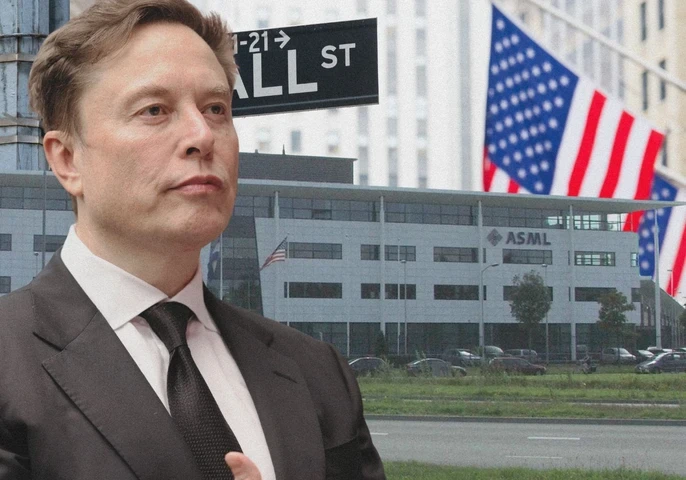
The damage was sharper further down the supply chain. CNBC reported that concerns about a slowing pace of AI buildout hammered neoclouds, with CoreWeave and Nebius both tumbling more than 7 per cent on Wednesday. Shares in Tesla and SpaceX also fell in premarket trading. Elon Musk, whose record political spending drew scrutiny after the election, responded on X with a line about data centres in space looking appealing.
Inside BizLink’s $850M AI Bet
Acquiring Interplex Datacom positions BizLink as a full-stack AI data centre supplier and reshapes control of Asia’s server infrastructure chain.

Analysts were more measured than the share price. Melius Research kept its Buy rating on Nvidia on 2 November but cut its price target from $420 to $315, citing political resistance that could delay power capacity and reduce near-term infrastructure spending. Yahoo Finance's analyst consensus average target stood at about $327. At roughly 25 times trailing earnings, Nvidia is not priced like a bubble stock, which is one reason some analysts argue the sell-off is more about sentiment than fundamentals.
The next catalyst is close. Nvidia reports its fiscal 2027 third-quarter results on 17 November, with management having previously forecast $108 billion in quarterly revenue. Commentators expect the call to address the political and power constraints directly. The Motley Fool noted that the company's Vera Rubin architecture could lift revenue per gigawatt of capacity by around 60 per cent, which, if accurate, matters in a world where gigawatts may become harder to secure.
The $725 Billion Question
The politics collide with the largest private infrastructure programme in modern history. According to figures compiled from first-quarter earnings, Alphabet, Amazon, Microsoft and Meta have raised their combined 2026 capex plans to about $725 billion, up 77 per cent from last year's record of $410 billion. Amazon is guiding to about $200 billion, Microsoft to roughly $190 billion (including about $25 billion attributed to higher component prices), Alphabet to $180–190 billion and Meta to $125–145 billion. Bank of America and Evercore project that combined hyperscaler capex will exceed $1 trillion in 2027. Estimates vary by tracker, with some putting the 2026 total nearer $700 billion depending on which companies are included.
The companies say demand justifies it. Alphabet's Google Cloud backlog has passed $460 billion, and Microsoft has said it will remain capacity constrained through 2026. But the financial strain is visible. Analysis of first-quarter filings by Om Malik showed Alphabet's free cash flow down 38 per cent year on year and Microsoft's down 22 per cent, while Amazon's trailing twelve-month free cash flow fell from about $26 billion to $1.2 billion.
Permit delays and moratoriums have implications beyond individual projects. Slower approval processes could limit how quickly new data centre capacity comes online, increasing the value of sites with existing power and land agreements. Developers planning projects in areas facing local opposition may also face higher costs and longer construction timelines.
The Pressure to Keep Pace With China
The case that the election is bad news for the industry is not unchallenged. Gary Cohn, the former Goldman Sachs president, shared his views stating that data centres already in the ground are "more valuable today than they were yesterday", arguing that restrictions on new supply reduce overbuilding fears and the risk of falling compute prices. On that reading, incumbents with permitted sites gain a moat.
There is also the national-security argument that Republican candidates such as Jay Feely made in Arizona. Which was that restricting American data centres risks ceding ground to China in the global AI race. Supporters of the buildout also point to jobs, tax revenue, and the investment already committed. Pew's research found that Americans do see positives in local employment and tax revenue, even as they weigh the downsides more heavily.

Meanwhile, politicians who campaigned on moratoriums will now face the practical task of governing. Pausing approvals while legislatures write rules is a different proposition from permanently blocking projects, and the details of any new laws will determine the real impact on the sector.
What It Means for Enterprise Tech Leaders
For CIOs, CTOs and infrastructure planners, the election changes the risk calculus rather than the underlying demand. Four practical implications stand out.
- Stress-test capacity plans. Assume permitting delays in contested states and model the cost of moving workloads to other regions. Contracts that depend on a specific facility coming online on schedule deserve a second look.
- Expect higher and more explicit energy costs. Candidates focused on who pays for new generation and grid upgrades. Rules requiring large operators to fund their own power are likely to appear in state legislation, and those costs may flow into pricing for cloud and colocation customers.
- Treat community consent as an engineering constraint. Local engagement, water-use commitments and benefit-sharing agreements are becoming conditions for approval, not optional extras.
- Invest in efficiency. If capacity is harder to add, getting more from existing compute becomes strategically valuable. That favours inference optimisation, smaller models, edge deployment and more efficient hardware.
The AI Buildout Meets Democracy
The AI industry has largely operated on the assumption that demand for computing power would determine the pace of data centre construction. The 2026 midterms have shown that local communities and elected officials also have a role in shaping that growth.
The expansion is far from over. Investment commitments remain substantial, while demand for computing capacity, chips and data centre space continues to drive development. However, projects now face greater scrutiny over their impact on local communities, particularly around energy costs, water use and planning approvals. Operators will need to address these concerns as they compete to bring new capacity online.
Several developments in the coming weeks will offer an indication of what comes next, including Nvidia's earnings on 17 November, the incoming Texas administration's approach to data centre development and the decisions state legislatures make when they reconvene in January. The outcome of the 3 November elections has brought a new factor into the AI infrastructure debate namely, the pace of expansion will depend not only on investment and demand, but also on public support and political decisions.


Comments ( 0 )